Thermally modified timber is wood that has been heated to between about 160°C and 230°C in a low-oxygen environment. This permanently changes the wood’s structure, making it more stable and more resistant to rot without using chemicals. The idea is older than most people think: scientists were studying it more than a century ago, it became a commercial product in Finland in the 1990s, and in the last decade it has given British-grown hardwoods a new life outdoors. Here at UK Hardwoods we love the fact we’re able to provide a sustainable, and chemical free product that has unrivalled credentials compared to other cladding. We’ve always focused on the environmental factors of timber we sell, and thermally modified cladding is no exception. We’re running the only thermal modification plant in the country that runs using solar energy, an hugely important factor that drives our passion for our thermally modified timber.
Ancient roots: people have used heat to toughen wood for millennia
Long before anyone understood why, people knew that heat could make wood harder and longer-lasting.
- Fire-hardened tools. Prehistoric hunters hardened the points of wooden spears and digging sticks in fire.
- Charred posts. Farmers and builders charred the ends of fence posts and timbers before setting them in the ground, to slow rot.
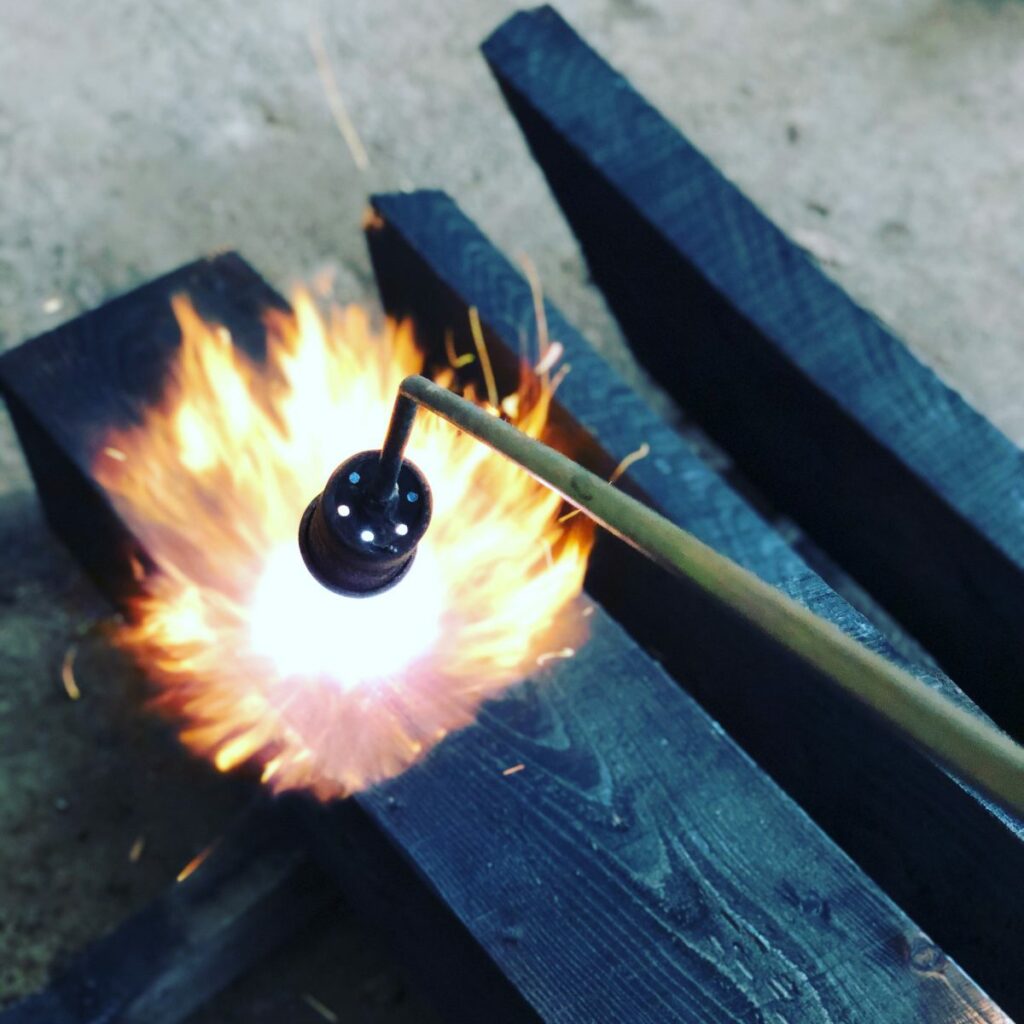
- Shou sugi ban (yakisugi). In Japan, the surface of cedar cladding was charred to protect it from weather and insects. The look is popular again on modern houses.
These methods only treated the surface. Modern thermal modification is different: it changes the wood all the way through, so it keeps its properties when cut, planed or sanded.

The science arrives: 1915 to the 1980s
Scientific study of heat-treated wood began in the United States in 1915, but it took most of the century for the idea to become practical.
- 1915: Researchers at the US Forest Products Laboratory in Madison, Wisconsin, first studied how heat changes wood (Construction Canada).
- 1937: Alfred Stamm and Ralph Hansen showed that heating dried wood in hot gases reduced how much moisture it absorbed, making it more stable (BioResources).
- 1940s–1950s: Stamm’s team at Madison kept refining the work, but the wood lost strength, and cheap chemical preservatives won the market instead.
- 1970s–1980s: Research continued in Europe, especially in Germany. During the 1970s and 1980s, German researcher H. Burmester who developed what we know as the FWD (Feuchte- Warme- Druck) process. This transaltes as the Humidity- Heat- Pressure Process. He established a vital bridge between early 20th-century wood science and modern commercial thermal modification. Through controlled pyrolysis, he was able to degrade and alter the wood’s cell wall polymers. He discovered the ‘sweet spots’ of certain timbers, realising there was a difference in pressure and temperature used for softwoods over hardwoods. He was a true pioneer of today’s thermally modified timber.
What changed? Better control of temperature, moisture and oxygen, plus growing pressure to move away from chemical preservatives and tropical hardwoods.
Going commercial: the European breakthroughs of the 1990s
Thermally modified timber became a commercial product in Europe in the 1990s, led by Finland.
- Finland – ThermoWood. VTT, Finland’s technical research centre, worked with Finnish industry to develop the ThermoWood process in the early 1990s (Forests journal). Wood is heated slowly to around 212°C, using steam to stop it burning, over two to four days (Lunawood). The Finnish ThermoWood Association was set up in 2000 (Thermoholz).
- France – Retification. A French process heating wood in nitrogen rather than steam.
- Netherlands – Plato. A multi-stage process using water, heat and drying.
- Germany and Austria. Oil-heat treatment and other kiln processes followed.
Thermal modification is now the most widely used commercial wood modification process in the world, with ThermoWood the leading method (Forests journal). Most of it, though, uses softwoods such as pine and spruce.
A lot of previous customers have found us whilst looking for an alternative to imported thermally modified softwoods, and have found thermally modified ash or poplar.
The British chapter: thermally modified UK-grown hardwoods
The British chapter: thermally modified UK-grown hardwoods
Britain came late to thermally modified timber, but it brought something new: home-grown hardwoods that had few other uses.
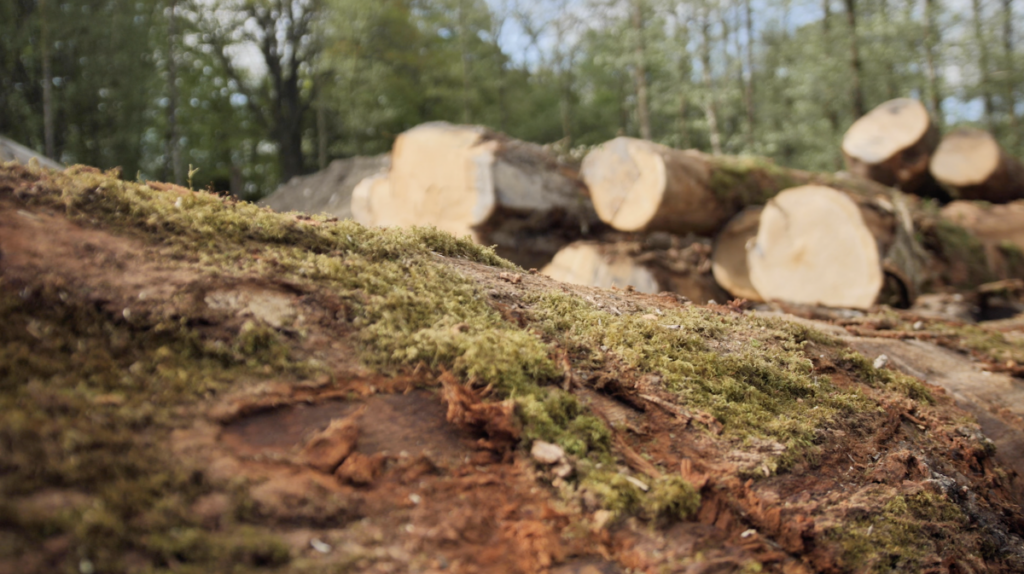
The problem. British woodlands hold plenty of ash, sycamore and poplar. These “white hardwoods” are not naturally durable outdoors, so most went to firewood or low-value uses while the UK imported tropical hardwoods and modified softwoods.Britain came late to thermally modified timber, but it brought something new: home-grown hardwoods that had few other uses.
The problem. British woodlands hold plenty of ash, sycamore and poplar. These “white hardwoods” are not naturally durable outdoors, so most went to firewood or low-value uses while the UK imported tropical hardwoods and modified softwoods.
Brimstone, 2016. Wiltshire sawmill Vastern Timber launched Brimstone at Ecobuild in 2016, the first commercially available thermally modified British timber (ASBP). It grew out of a collaboration with Grown in Britain, the BRE, Timber Strategies and Tyler Hardwoods, aimed at finding new markets for home-grown timber (RIBAJ). The range uses British ash, sycamore and poplar for cladding, decking, joinery and furniture.
Ash dieback. It’s a sad fact that a lot of our British Ash trees are dying, or have already died. However, thermal modification gives this timber a long lasting use and means that it isn’t just being chipped or going to waste. However, a lot of the ash trees with this disease have become too brittle to saw or use commercially, so we’re not seeing the glut of ash trees that so many people think exists.
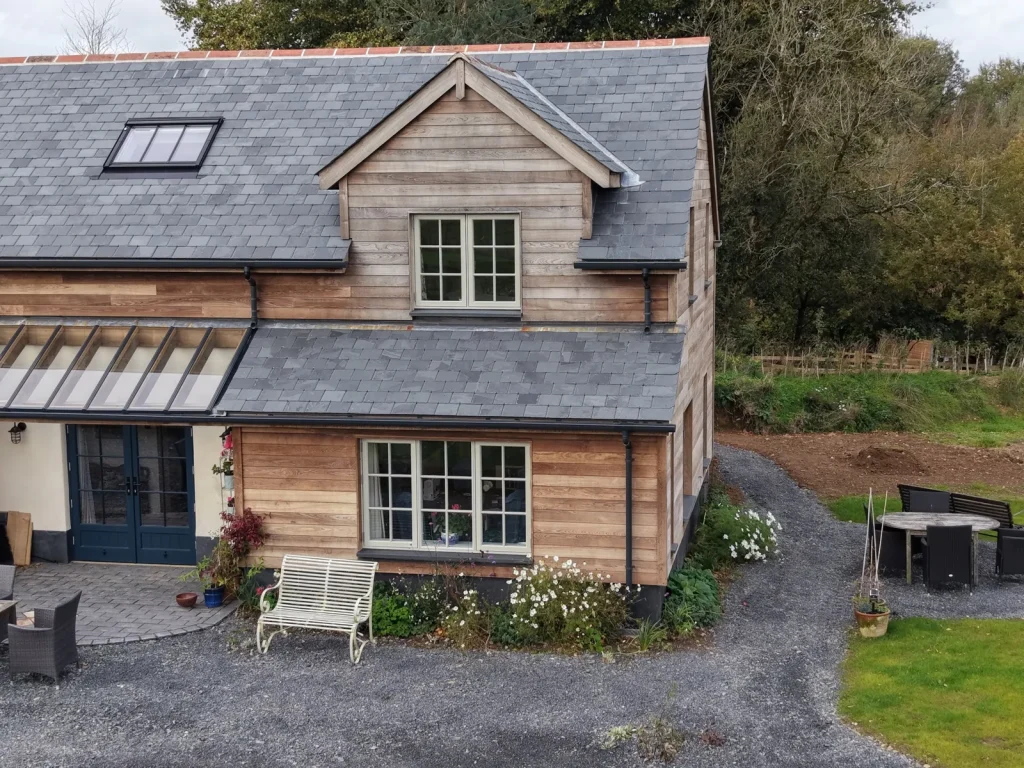
UK Hardwoods and thermally modified timber. The next step in the story. We run our thermoplant from solar powered energy and want to emphasise the importance of doing so. The thermally modified timber we produce is completely sustainable, with a life cycle that any home owner or specifier can be confident and proud of. We offer our timber in Ash, Poplar for cladding or decking, and also Oak as a flooring option giving a toasted oak appearance.
The demand for British thermally modified timber will continue to grow in this country as we become increasingly aware of our footprints on the planet. Building regulations are becoming tighter to drive for better efficiency and better sustainability credentials on each new build.
Timeline at a glance
Date | Milestone |
|---|---|
2023 | UK Hardwoods introduces thermally modified timber using a solar panel energy source for the treatment plant. Ash and Poplar are used commonly for cladding |
2016 | Brimstone, the first commercial thermally modified British timber, launches. Timber was initially sent to France for modifying before being transported back to the UK |
2000 | Finnish ThermoWood Association founded |
Early 1990s | VTT and Finnish industry develop ThermoWood; Retification (France) and Plato (Netherlands) follow |
1970s–80s | Research continues in Europe- with Germany being at the forefront |
1937 | Stamm and Hansen show heat makes wood more stable |
1915 | US Forest Products Laboratory begins studying heat-treated wood |
Prehistory | Fire used to harden wooden tools and posts |

Thermally modified timber: common questions
What is thermally modified timber?
It is wood heated to around 160–230°C with little or no oxygen. The heat permanently changes the wood’s cell structure, making it more stable and rot-resistant without chemicals.
How long does thermally modified timber last outside?
Well-modified hardwoods can reach durability Class 2, at least 30 years or more above ground, depending on species and process. Our service life of thermally modified ash is 60 years above ground.
Does thermally modified timber need treating?
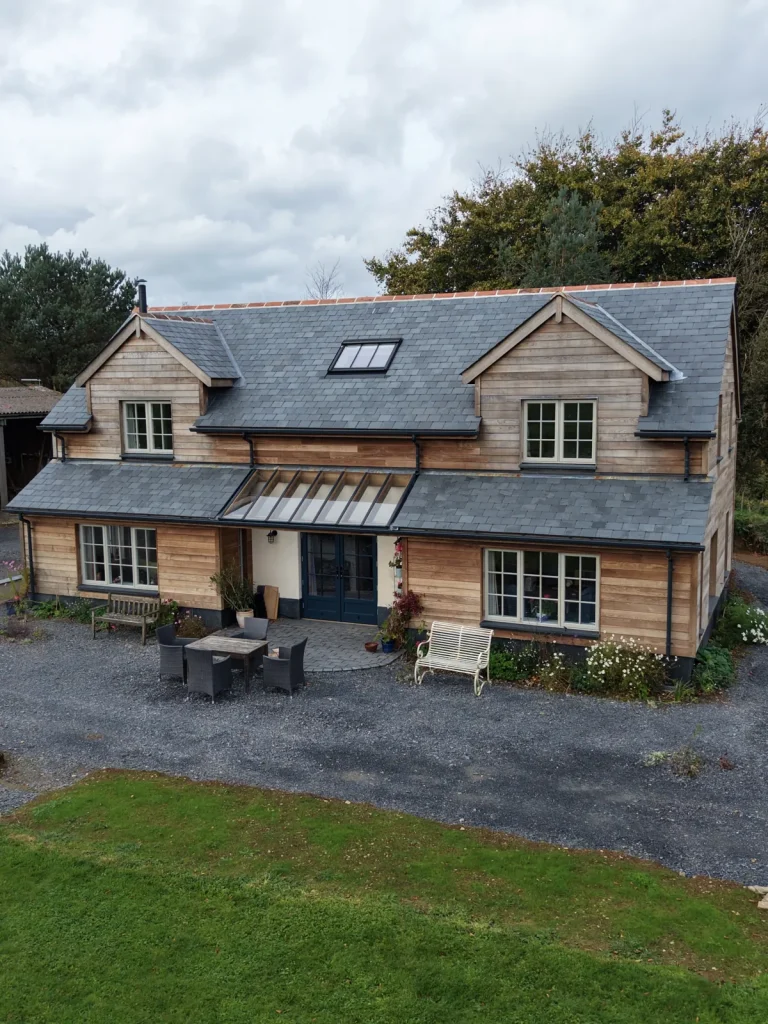
No preservative treatment is needed. Left untreated, it weathers to a silver-grey. A UV-protective oil keeps the brown colour for longer. We strongly recommend leaving the thermally modified timber to weather naturally rather than applying an oil or product. We believe that these products can look faded and need reapplying in a short time.
Is thermally modified timber strong enough for decking?
Yes, for most decking and cladding, but heat treatment makes wood more brittle, so it is not suitable for structural or load-bearing uses. For cladding, we recommend fixing it a 600mm centres. For decking, we would recommend 400mm spacings or 300mm in high traffic areas. We offer two secret fix profiles and five visible fix profiles. We advise pre drilling before fixing with a stainless steel screw.
Is thermally modified British hardwood sustainable?
Using home-grown ash, sycamore or poplar cuts transport miles and replaces tropical hardwoods, with no chemicals added. We’re certified with Grown in Britain and source all of our trees from either our own managed woodlands here in the UK or from other woodlands and estates in England.
About UK Hardwoods
UK Hardwoods supplies thermally modified British hardwood cladding, decking and joinery timber from our workshop in Devon.
Polly and Tom Bedford run UK Hardwoods in South Molton, Devon as a husband and wife team. Toms father started the business in 1979, and Tom took over in 2012. We share a love of nature and all things wood. Thermally modified timber has a great history behind it and we’re really proud to be part of the story.
Considering thermally modified timber for your project? Order samples or get in touch to talk through species, profiles and quantities. We deliver across the UK and will be able to quote within 24 hours.
Author: Tom Bedford. Managing director. 33 years in the timber trade.